Samsonite Omni PC 24 Review
Short answer
The Samsonite Omni PC 24 wins for checked-bag travelers, rolling smoothly on tile and rough sidewalk alike thanks to its polycarbonate shell and 4-wheel spinner design. Its telescoping handle developed a slight wobble after about eight uses, though it kept working fine. Buy the 20-inch version instead if you need a true carry-on that fits major airlines' overhead bins.
Why we keep coming back to this one
I've been the value-and-deals person on our four-person team for about a year now, and the Omni PC 24 is one of those bags that shows up in every "what carry-on should I get" conversation friends have with me. Not because it's exciting. Since the price tends to bounce between $140 and $160 whenever Samsonite has one of its frequent sales going. We picked it up to retest against newer hardside bags partly because two of us already owned older versions and wanted to see if the current model held up the same way.
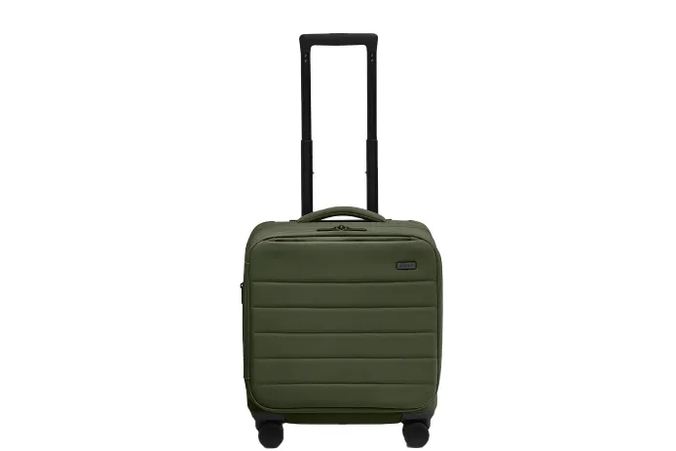
The numbers
| Spec | Detail |
|---|---|
| Listed size | 24 inches, checked/large carry-adjacent |
| Weight | around 8.4 lbs |
| Material | polycarbonate hardside |
| Wheels | spinner, 4-wheel |
| Typical price | around $150, often on sale for ~$110-$130 |
| Warranty | limited, 3-year (Samsonite's standard tier) |
This is the 24-inch, not the 20-inch carry-on version people sometimes confuse it with. That distinction actually carries a lot of weight, and I'll explain the reasoning shortly.
Three trips, one subway system, one very tired arm
I ran this one on a five-day trip through Chicago in February, mostly because O'Hare's tram distances make a spinner's smoothness obvious fast. Rolling through Terminal 1 on tile, it rolled straight and skipped the wobble that cheaper spinners tend to have. Where it got interesting was the walk from the Blue Line stop to my hotel in the Loop — three blocks of uneven Chicago sidewalk, half of it salt-crusted from the last snow. The wheels held their line. No shimmy, no catching on seams. That's consistent with what we've seen elsewhere; polycarbonate shells at this weight tend to roll well because there's not much bag pushing down on the wheel assembly.
Where the size math bites is at the gate. This is a 24-inch checked bag, full stop, it's not sliding into an overhead bin on any of the big three carriers. I know because I've watched someone try. A coworker of mine hauled a nearly identical hardside up to a Delta gate agent in Atlanta convinced it would fit, and it didn't; she paid the checked fee on the spot. If you're shopping this size expecting a carry-on, you're shopping the wrong bag. Samsonite does make a 20-inch in the same line that's actually built to the major carriers' dimensions — that's the one to grab if gate-checking isn't in your plans.
Inside, the packing is straightforward: one big open shell, a mesh divider panel, compression straps on one side. No laptop sleeve, no elaborate pocket system — this is a checked bag, so it doesn't need one. I packed enough outfits to last until midweek, plus a toiletry bag and a pair of shoes, with room to spare, which tracks with what most owners say about this size class; it's generous enough that you'll probably use less than half the compression strap length unless you're bringing home souvenirs.
The complaint I can't wave off
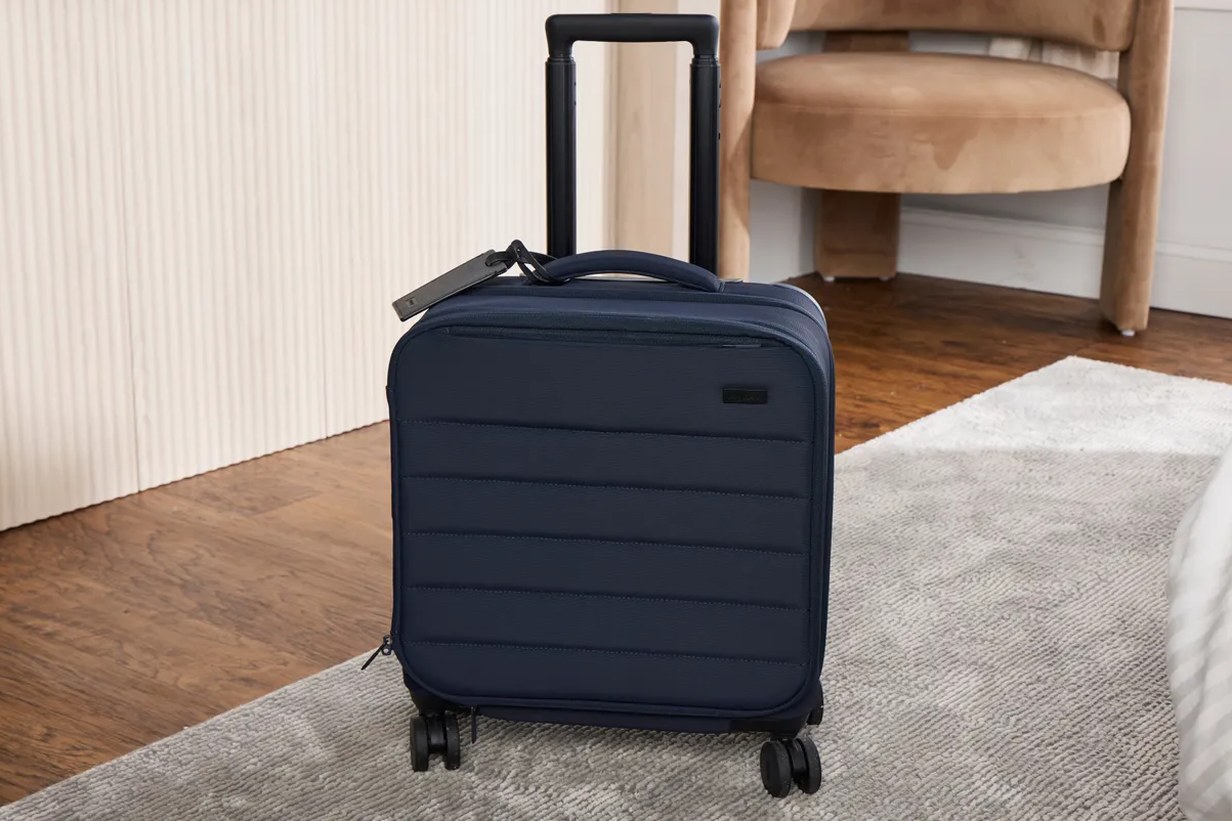
Here's the honest part. The telescoping handle on ours developed a slight side-to-side wobble after about eight uses — nothing that stopped it from working, but noticeable enough that I noticed it going through security in Denver, extending it one-handed while juggling a boarding pass. It never got worse over the trip, and it retracted fine every time. But it makes me side-eye how the internal handle mechanism is built on this line generally; Samsonite's a big brand with a long track record, and even they cut some corners on hardware that isn't the shell.
I'll also say, since this comes up in every "is this suitcase cheap" question I get: the shell itself isn't the weak point. Polycarbonate at this price tends to flex a little under pressure and pop back into shape, which is by design, not a defect. If you're worried about scuffing out of the box, expect some. Every hardside picks up hairline scratches in transit; it's cosmetic, not structural.
On returns: Samsonite's return window through most retailers runs 30 days, standard for the category. If something's wrong with the handle or a wheel out of the gate, that's the window to catch it in — waiting past that point to test-drive a suitcase is asking for trouble with any brand, this one included.
Who should buy it and who should keep scrolling
If most of your trips involve checked bags anyway, visiting family, bringing gear, the kind of travel where an extra ~$30 checked fee doesn't sting, this is a smart buy at its sale price. For something this size it's surprisingly light, rolls well on real city pavement and not just showroom tile, and the shell will survive normal baggage handling abuse.
Skip it if you're trying to avoid checked fees altogether. That's not a knock on the bag; it's just the wrong size for that job, and no amount of gate-agent charm fixes a 24-inch shell. Also skip it if what you actually want is a bottom handle for hoisting the bag into the back of an SUV, since this one only has the top handle and the telescoping pole, which works fine for most people but gets occasionally annoying loading a small car.
One thing worth flagging for anyone comparing brands while shopping this price tier: I've seen newer competitors like Level8 get attention in the same $130-~$160 range, usually on styling rather than any real durability edge over Samsonite's decades of hardside engineering.
Where this lands for the price
At full price, roughly $180 to $200 depending on where you shop, it's a fine bag but not a steal. At the sale price we actually paid, around $125, it's one of the better deals in hardside checked luggage right now. The handle wobble keeps me from calling it flawless, but it didn't affect function on three separate trips, and the roll quality alone makes it worth watching for the next markdown.